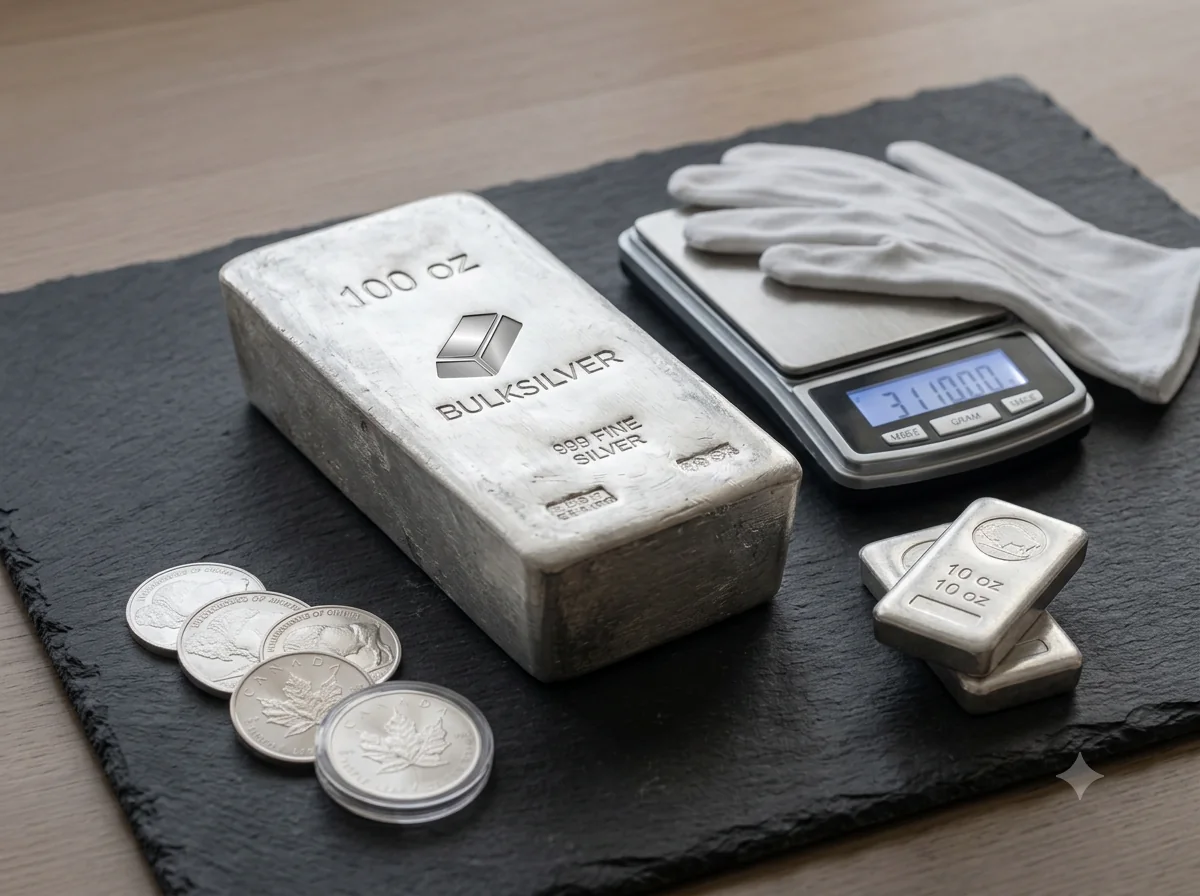
A 100 troy ounce silver bar contains roughly 3.11 kilograms of metal. It is a serious object, not a decorative paperweight, and it changes the practical questions around shipping, storage and resale.
Why buyers choose 100 oz bars
The attraction is simple: a large bar generally spreads fabrication and packaging costs across more ounces. That can reduce the premium per ounce compared with sovereign coins, one-ounce rounds and many smaller bars. It also consolidates a meaningful amount of silver into one manageable unit rather than hundreds of individual pieces.
The drawback is the same concentration. A buyer cannot sell ten ounces from a 100 ounce bar. The entire bar must be verified and sold as one piece, which narrows the pool of casual private buyers and increases the importance of a recognizable refiner or dealer.
Generic, recognized and vintage bars
“Random design” or assorted bars can be a value-oriented choice because the buyer accepts whichever qualifying brand is available. Recognized refinery bars may carry a little more premium but can reduce friction later. Vintage names such as Engelhard may trade partly as collectibles, which means their price can detach from ordinary low-premium bullion.
Shipping and storage reality
A 100 ounce bar is compact, but it is heavy. Multiple bars quickly become a structural, handling and insurance problem. Before ordering, decide where the package will be received, how it will be moved discreetly and whether the storage location is rated for the combined load.
Resale planning
Ask local dealers how they quote common 100 ounce bars before you buy. Some pay close to spot for recognized brands; others may require testing or discount unfamiliar cast bars. Preserve packaging and purchase records, but do not assume a serial number creates a collectible premium.
Check current dealer inventory
Use multiple shelves. The lowest displayed unit price is not always the lowest delivered price.
Affiliate links may earn us a commission. Inventory, premiums, minimums and shipping terms change; confirm the final checkout total with the dealer.
Bullion is volatile, can trade below your purchase price, produces no income and creates storage, insurance and resale responsibilities. This page is educational and does not recommend a personal allocation.