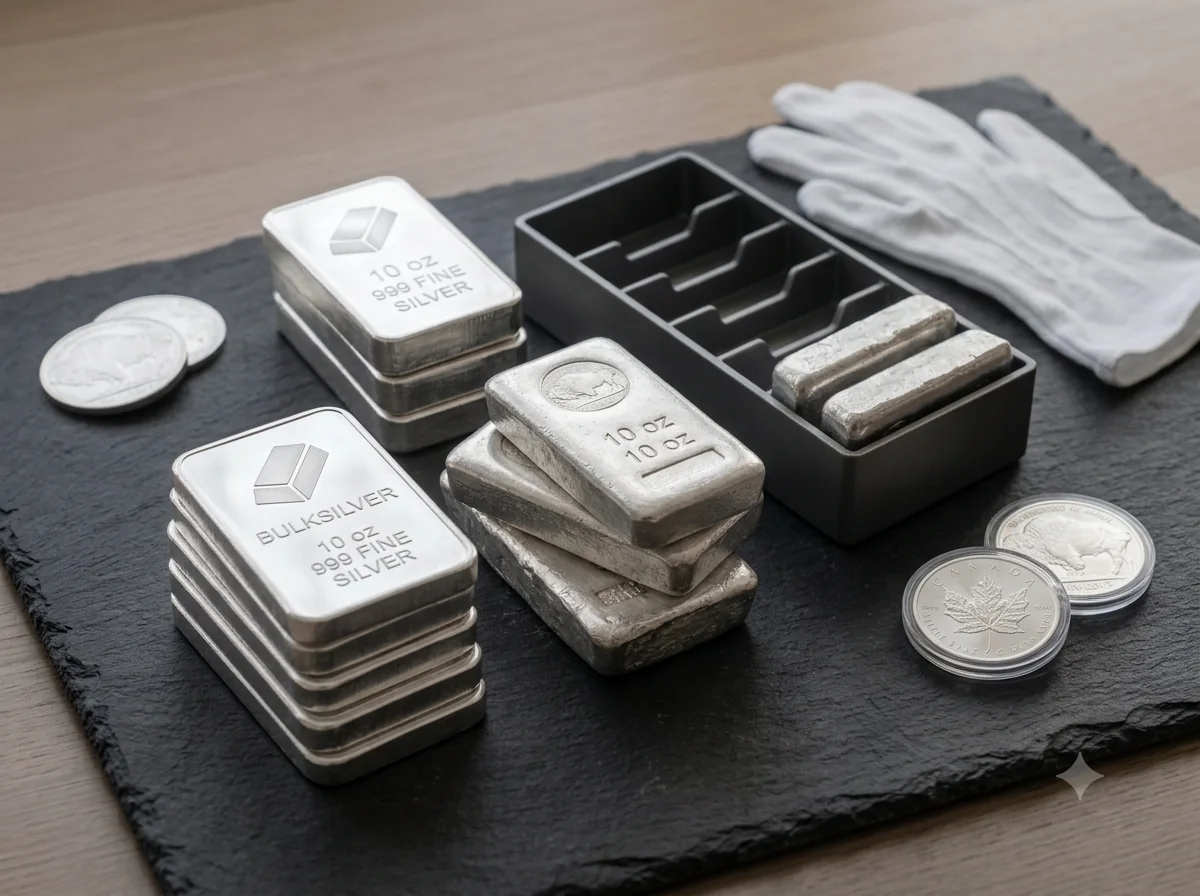
Ten-ounce bars occupy the useful middle ground between one-ounce flexibility and 100-ounce efficiency. That balance is why they are a core format for many private silver buyers.
Why ten ounces works
A 10 ounce bar is large enough to reduce per-ounce fabrication cost, small enough to move with one hand and divisible across several future sales. Ten bars equal the fine-silver weight of one 100 ounce bar, but allow a seller to liquidate the position in stages.
Minted, cast and stacker designs
Minted bars tend to have crisp edges and polished surfaces. Cast bars look more industrial and may show cooling lines. Interlocking “stacker” designs can organize neatly, but buyers should not automatically pay a large premium for the convenience.
Assorted bars and brand choice
An assorted 10 ounce listing can be sensible when the goal is pure weight at a lower price. A named refinery may be worth a modest premium when local recognition matters. Compare the actual spread, not the emotional pull of a logo.
How many is really bulk?
Dealers often reduce per-unit pricing at quantity breaks. Before chasing the next tier, calculate whether the savings justify the extra ounces, shipping weight and storage commitment. A “discount” that doubles the order is still a larger purchase.
Check current dealer inventory
Use multiple shelves. The lowest displayed unit price is not always the lowest delivered price.
Affiliate links may earn us a commission. Inventory, premiums, minimums and shipping terms change; confirm the final checkout total with the dealer.
Bullion is volatile, can trade below your purchase price, produces no income and creates storage, insurance and resale responsibilities. This page is educational and does not recommend a personal allocation.